 (click to enlarge)
“Hail, Mary, full of grace, punch the devil in the face!”
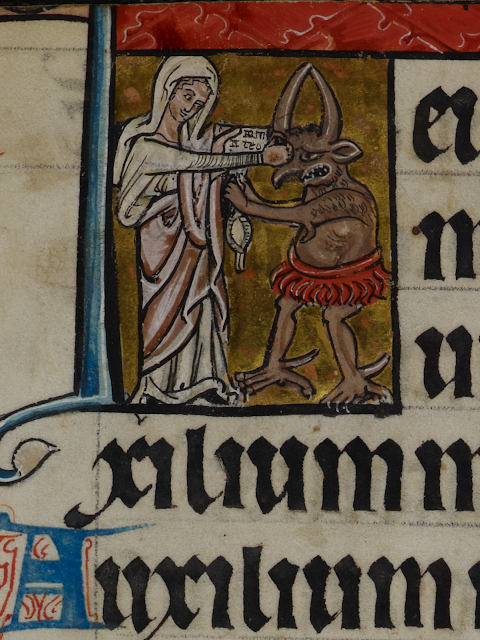
Once upon a time, there was a man named Theophilus who made a bargain with the devil. Thank God that Our Lady was able to help him! Do you want to know the full story? Listen here ! * The Prayer of Theophilus O miserable wretch that I am, what have I done and what have I wrought?... Where shall I, unhappy sinner, go, who have denied my Christ and his holy mother ( Christum meum et sanctam eius genitricem ) and have made myself a servant of the devil ( seruum diaboli ) through a chirograph of wicked warrant ( per nefande cautionis chirographum )? Who, do you think, will be able to pull it away from the hand of the devil, the destroyer, and help me? Why was it necessary for me to become acquainted with that wicked Hebrew who should be burned? (For this same Hebrew had been condemned a little while before by law and judge.) Why indeed? For thus are they honored, who forsaking God and the Lord, run to the devil.... Woe ...

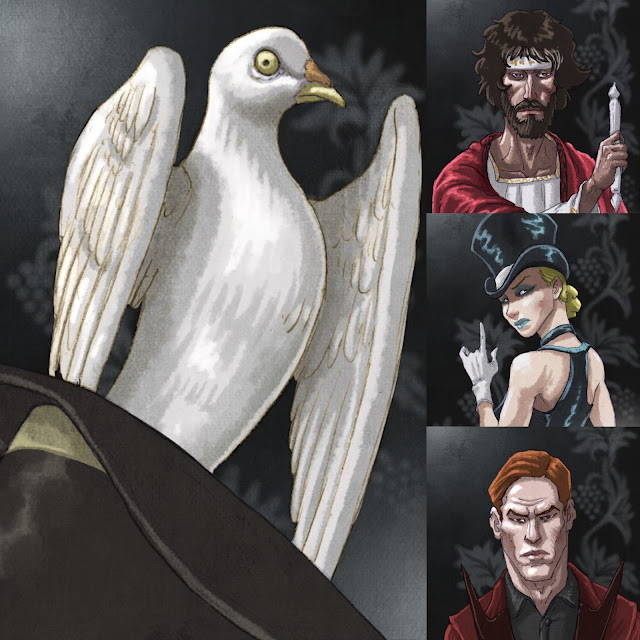

Frighteningly, I think sometimes it works *just that way*...
ReplyDeleteNice, but is the polemic really inevitable? I can't help but think of the difference between A. G. Dickens, Euan Cameron, and Eamon Duffy, on the one hand, and Diarmaid MacCulloch on the other. The former are engaged in the polemic (on different sides), while MacCulloch, I think, is beyond it. But then, his position as a gay, ex-Anglican, agnostic is unusual and, as he admits, contributes to his historiographical position. (Well, to be precise, it's the ex-Anglican and agnostic aspects that he admits as influences.)
ReplyDelete@Brian: Perhaps we don't always perceive it as polemic, but surely writing as a ex-anything suggests a particular interpretative position. I've tried to articulate a bit more clearly what's bothering me in today's post. Maybe it's that I don't buy anybody else's position but can't yet articulate mine.
ReplyDelete