Apropos that Google memo ... The players, in order of appearance Fuzzy Bear, a gamer Rules Bear, a stickler Dragon, a creature Medal Bear, a gentleman Fencing Bear, an athlete History Bear, an academic Mammoth, a socialite Bear of Hearts, friend of Mammoth Clown Bear, another friend Script by Master Bearson Production note: As I originally envisioned this morality tale, it was going to be entitled “Sexism 101,” but my son insisted that I be more subtle. And since the point of the piece is about the way in which women take over men’s games, and I had asked for his help giving the toys a game to talk about...it was only fair that I listen to him! Fencing Bear wanted to be much, much bitchier. Click on images to enlarge.
My comments for a conversation with Fr. Peter Funk, OSB, Prior of the Monastery of the Holy Cross, sponsored by the Lumen Christi Institute Abstract : Many traditional Christian beliefs and teachings about spiritual realities have become unpalatable to modern sensibilities. Accounts of angelic visitations, demonic possessions, the stain of original sin, and the threat of eternal torment are today considered untrue or irrelevant by non-believers and even many Christians. Why were such “myths” so central to Christian belief and practice for so many centuries? Is there any value in understanding why ancient, medieval, and contemporary Christians believe in such things? Or does Christianity need to be demythologized in order to survive in a post-enlightenment age? In this conversation, Rachel Fulton Brown and Fr. Peter Funk, OSB, will consider the history of these “myths” and their relevance for contemporary spiritual practices. ***** How many of you believe in angels...
Here be dragons. And doves. Human beings long for transcendence. Such longing is, for the world, always out of fashion because, of course, it is not a longing for the world, and the world knows it. We know what the world wants. The world—by which we mean Satan, the Lord of the World—wants above all our obedience, a jewel so precious that he will do anything to get it: lie, steal, murder, bear false witness, pretend to social standing, pretend to insider knowledge to get us to consent to his influence. “God lied to you. You will not die.” And suddenly we are anxious about having other people dislike us, about losing prestige in our social circles, about other people being more popular or influential or successful, about other people having secret knowledge, about our own influence and fame. “You shall be as gods, knowing good and evil.” And with that temptation, our first parents fell. The irony is cosmic. There they were in the Garden, privy to conversation with God face-to-face, ...
1. When white women (see Marie de France and Eleanor of Aquitaine) invented chivalry and courtly love , white men agreed that it was better for knights to spend their time protecting women rather than raping them, and even agreed to write songs for them rather than expecting them to want to have sex with them without being forced. 2. When white men who were celibate (see the canon lawyers and theologians of the twelfth century and thereafter) argued that marriage was a sacrament valid only if both the man and the woman consented , white men exerted themselves to become good husbands rather than expecting women to live as their slaves. 3. When white women (see Christine de Pizan, Mary Wollstonecraft, and the suffragettes) invented feminism , white men supported them (see John Stuart Mill) and even went so far as to vote (because only men could vote at the time) to let them vote, not to mention hiring them as workers and supporting their education. And before you start telling me a...
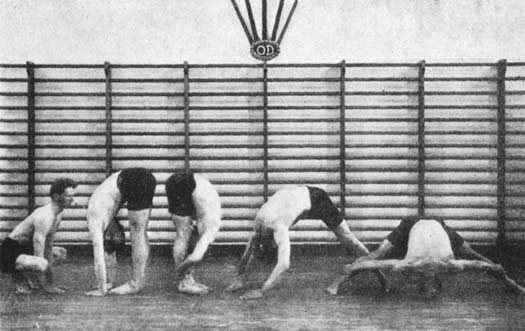
I knew it, I knew it! I have long been suspicious of the claims that my yoga teachers have made about the great antiquity of the postures that they were teaching us. Okay, so there were sculptures of yogis and Buddhas sitting in Lotus, but where were all the Downward Dogs and Warriors, Headstands and Forward Bends? Why couldn't any of the books show us illustrations or even properly referenced descriptions of these poses in the ancient sources if there were any? Well, as historian Mark Singleton has recently reported in Yoga Journal (November 2010), it's because there aren't.* It gets better (or worse, depending on how important you think antiquity is). Not only aren't these poses--and more or less all of the others which aspiring yogis and yoginis practice so diligently in yoga studios and health clubs the (Westernized) world over--particularly ancient. They aren't even Indian. They are, you guessed it, Western to begin with. To be exact, 19th-century...
 Hold that thought....



.....And to think that I was only to express an "Happy Quinquagesima Day!!" to you....
ReplyDelete